
No items found.
At Fetch, a brand refresh provided the opportunity to rethink how digital touchpoints were designed and built across web and campaign channels. Partnering closely with brand leadership, this work focused on translating an evolving visual identity and LLM-first web strategy into scalable design systems and agentic workflows that support ongoing growth.
As Fetch rolled out a brand refresh, our team needed to update digital touchpoints with a modernized look while keeping up with fast-paced marketing requests. At the same time, we set out to optimize our website structure for GEO and LLM search discovery, ensuring our content was clear and structured for both human visitors and AI engines.
Executing a brand refresh alongside GEO requirements created predictable production bottlenecks when handled manually. Relying on unstructured AI tools or inconsistent page layouts threatened to compromise both visual hierarchy and SEO performance. The goal was to build structured frameworks around our updated brand guidelines, giving the team tools to build compliant, AI-optimized web pages faster without losing craft or accessibility.
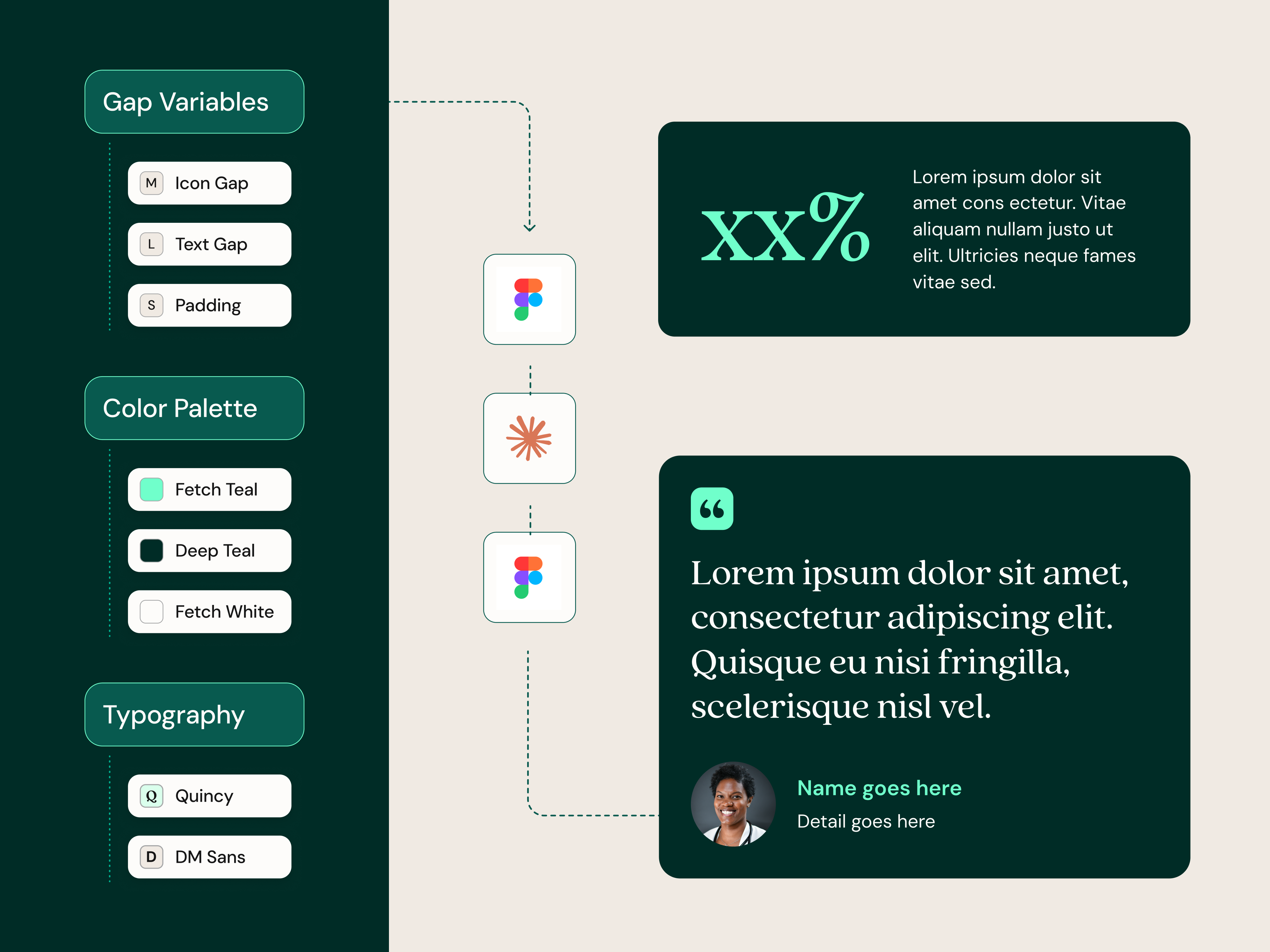
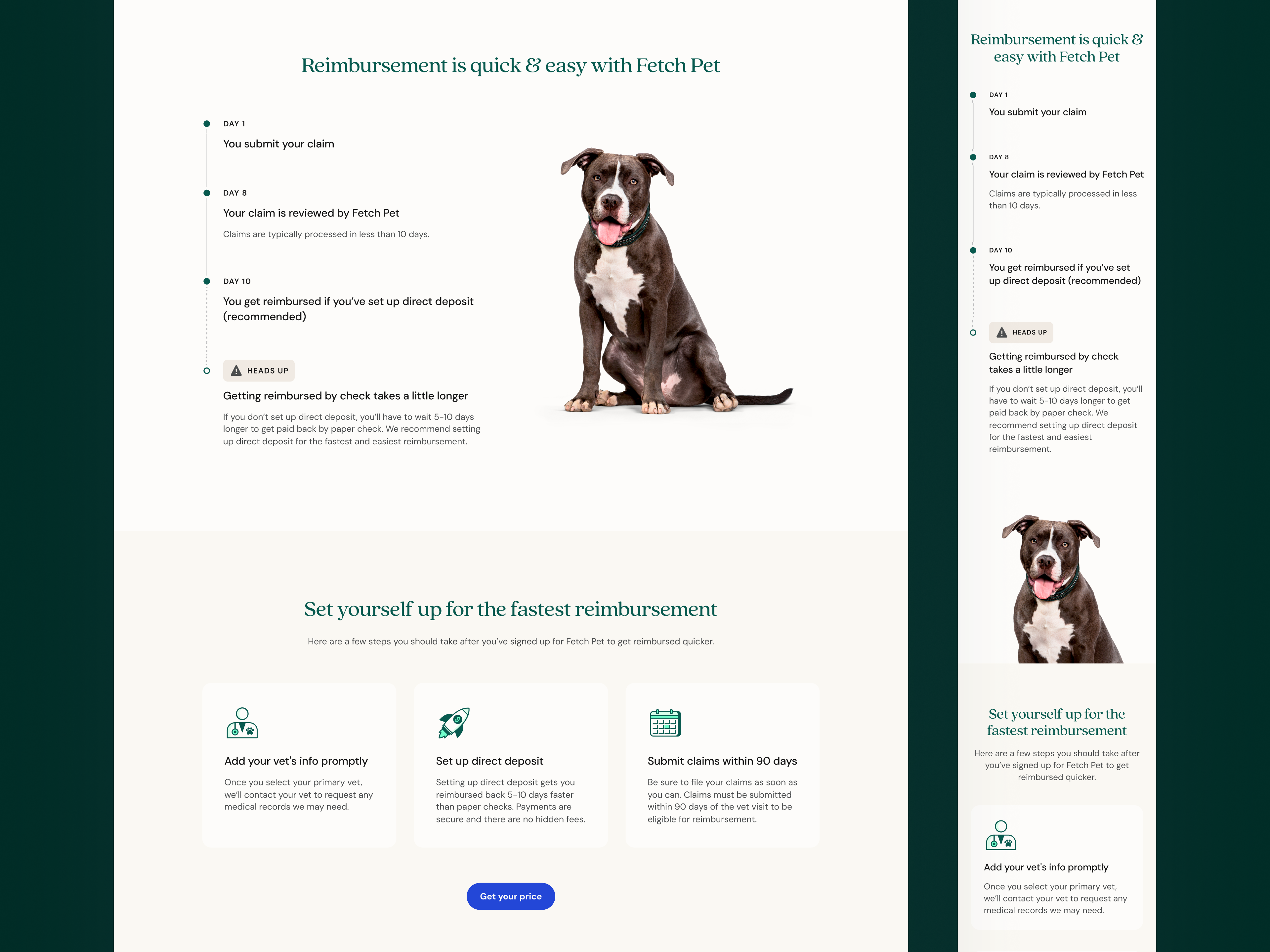
Instead of treating design systems and AI tools as separate initiatives, I built repeatable workflows that connected brand guidelines, code tokens, and two-stage automated quality control.
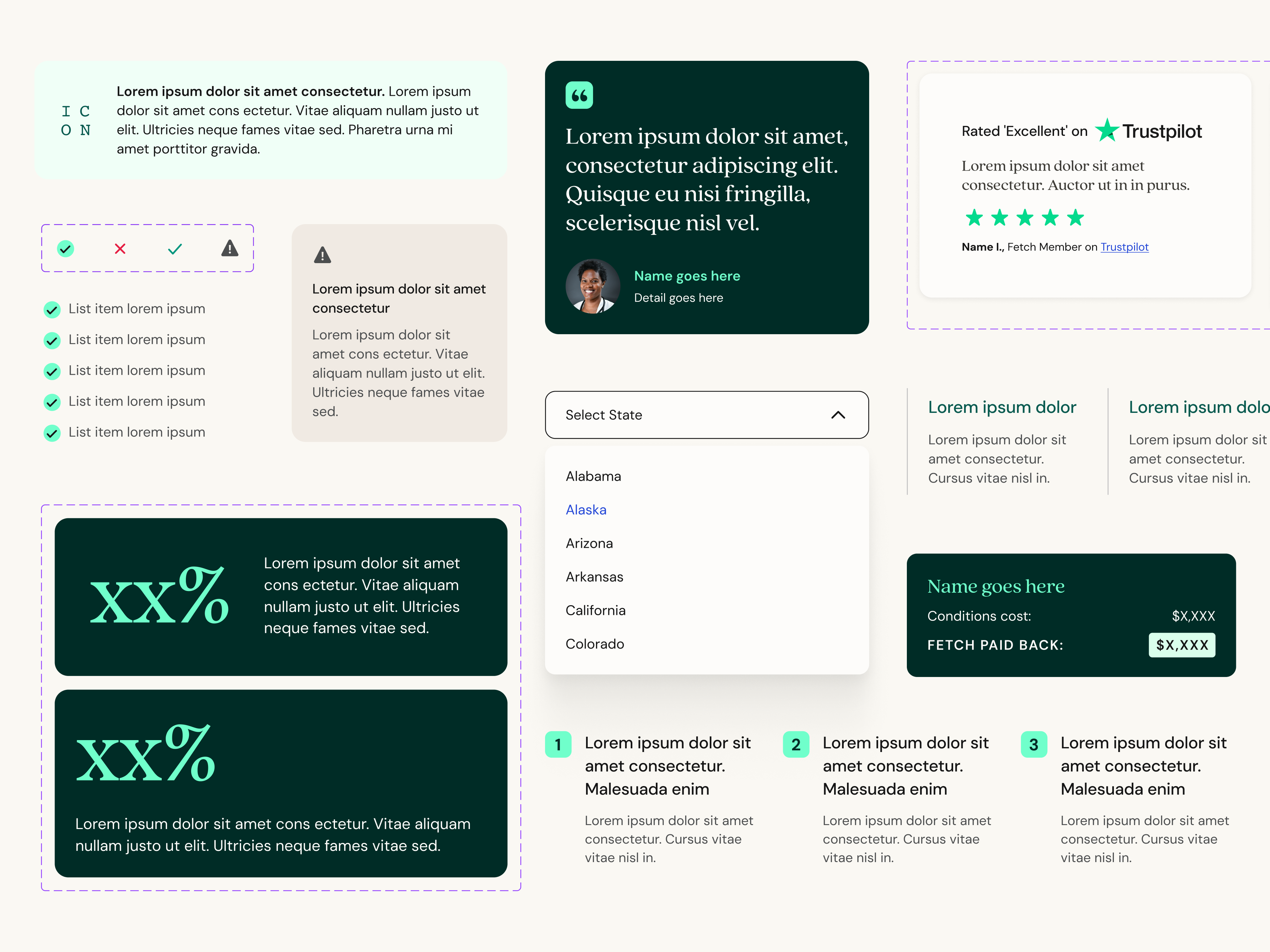
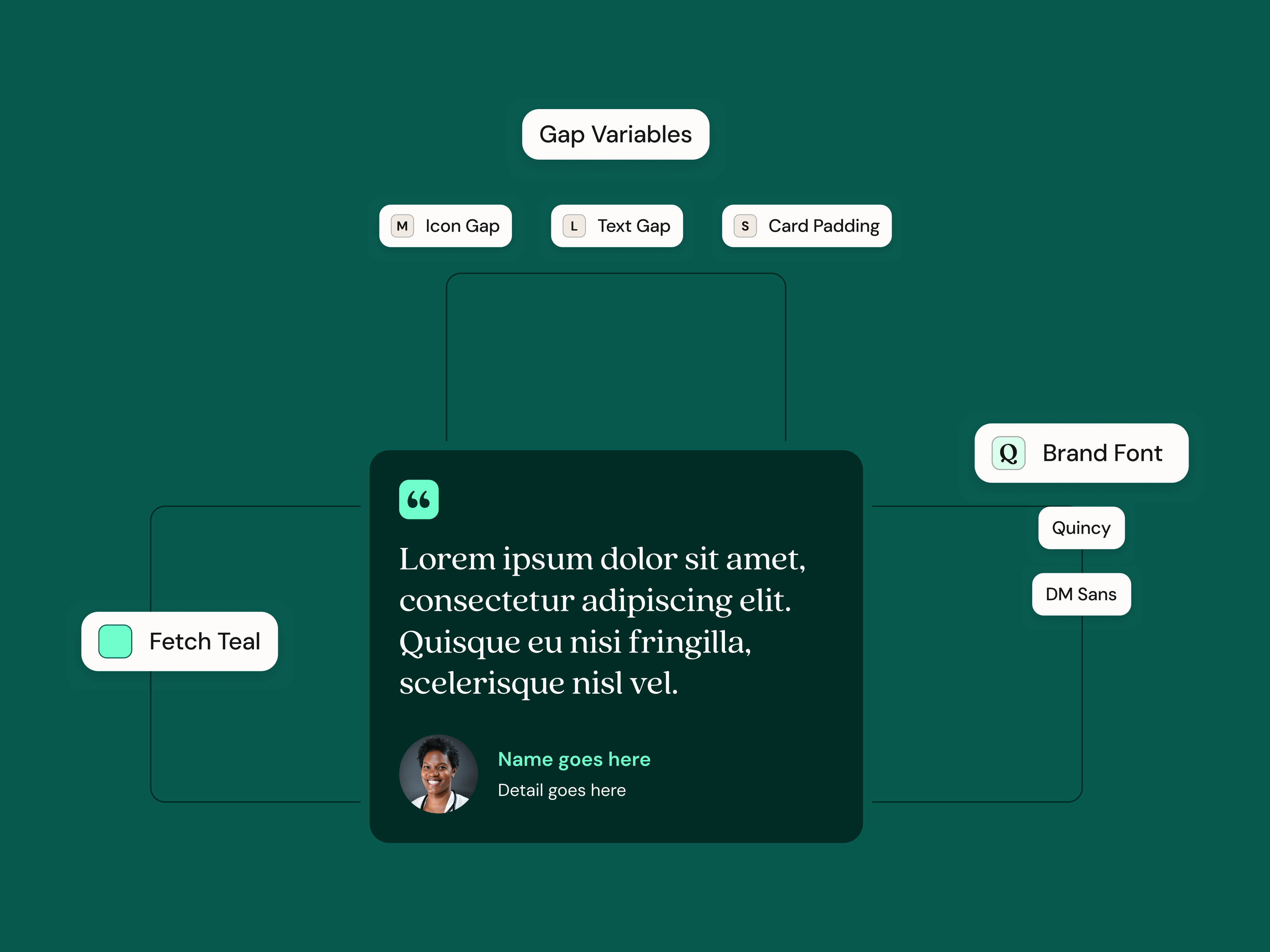
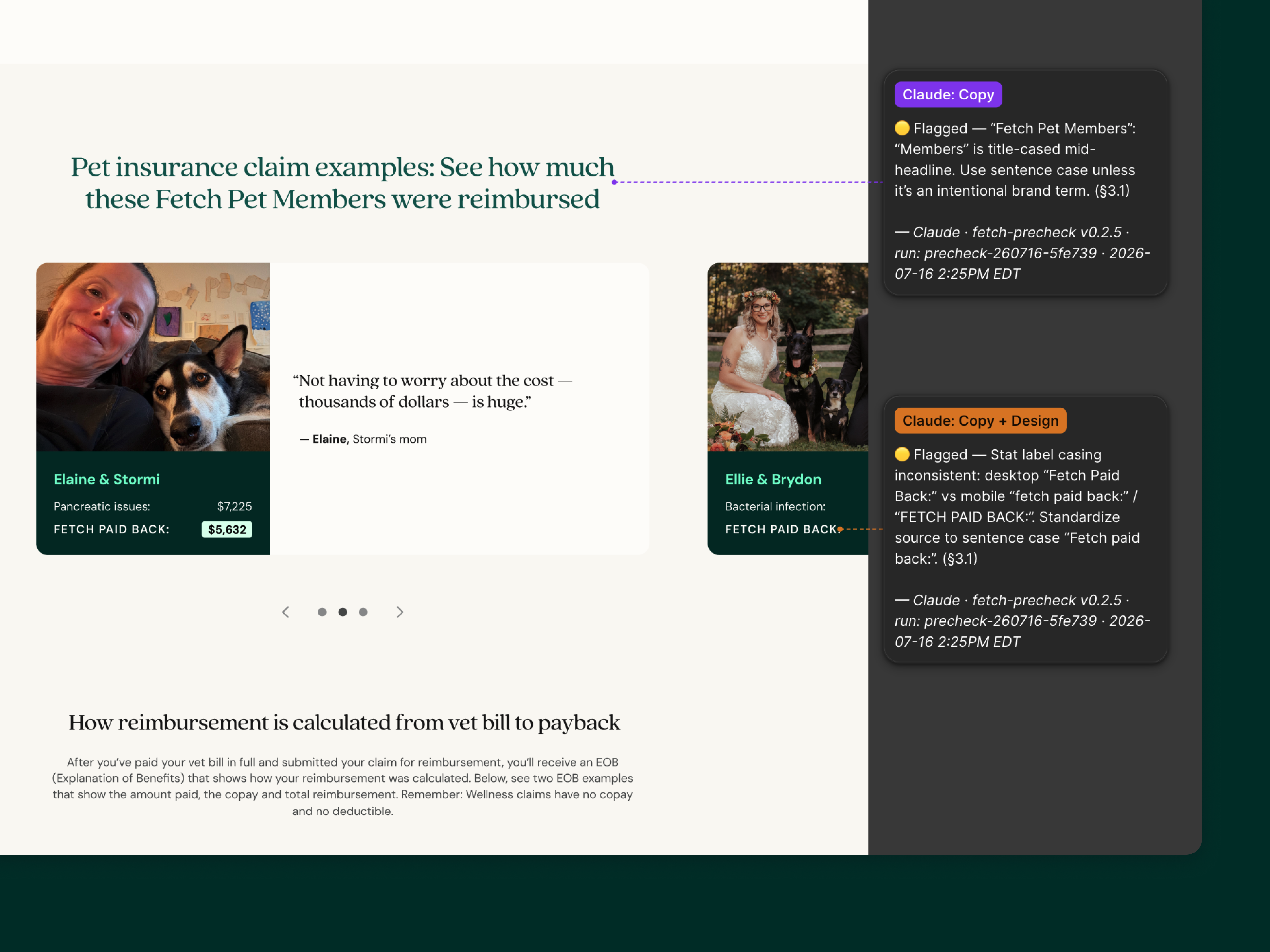
This setup established a modern framework for how Fetch scales digital creative output.
By aligning brand refresh goals with structured token architecture, GEO content standards, and automated testing, we accelerated turnaround times and reduced manual production tasks. Today, we continue to iterate and optimize across channels based on this established framework, maintaining a high bar for craft, accessibility, and search visibility for both human users and generative search engines.

